Address
Plot 100/487, Ibex Hill, Lusaka, Zambia
Work Hours
Monday to Friday: 7AM - 7PM
Weekend: 10AM - 5PM
Address
Plot 100/487, Ibex Hill, Lusaka, Zambia
Work Hours
Monday to Friday: 7AM - 7PM
Weekend: 10AM - 5PM


Is your website losing you customers? Discover 5 warning signs — slow speed, poor mobile, no CTAs — and how to fix them. Free consultation available.
Written by Mwenya Chongo — Web Developer & Digital Strategist, Mukwood Digital Last Updated: 22 May 2026 This article is based on verified industry research and data current as of May 2026.
Is your website quietly costing you customers every single day? Most business owners suspect something is wrong — but they don’t know exactly what. This guide walks you through the 5 clearest warning signs, backed by data, and shows you exactly how to fix each one.
Imagine spending money on flyers, word-of-mouth referrals, and social media — only for a potential customer to visit your website and leave within seconds. No call. No enquiry. No sale.
That’s not a hypothetical. It’s happening to thousands of Zambian businesses every single day.
According to research by Matomo (2025), the average website bounce rate — meaning the percentage of visitors who leave without taking any action — sits at 50.9%. That means roughly half of everyone who visits your site leaves before doing anything. Half.
The good news? Most of the reasons why are fixable. And in most cases, you don’t need to rebuild your entire website from scratch.
Mukwood Digital has worked with SMEs, NGOs, and startups across Zambia to identify and fix exactly these problems. This article shows you the 5 most common signs your website is losing you customers — and what to do about each one.
Not sure if your website has these problems? Chat with us on WhatsApp and we’ll take a look — for free. 📱 +260 764 377 700
Zambia’s digital economy is growing fast. According to ZICTA’s 2024 report, internet penetration in Zambia has been rising steadily, with mobile internet now the primary way most Zambians go online. More people are searching for businesses on Google, browsing on their phones, and making decisions based on what they see online — before they ever pick up the phone.
That means your website is often your first impression. And first impressions are brutal.
Research by Stanford University found that 75% of people judge a business’s credibility based on its website design alone. Not its products. Not its reviews. Its website.
In 2026, with AI-powered search tools like Google AI Overviews and ChatGPT now surfacing business results, a poor website doesn’t just lose you customers — it removes you from the conversation entirely.
The stakes have never been higher. Let’s look at the warning signs.
A slow website is a silent customer killer. Most business owners never realise how much it costs them.

Here’s the data: according to Google’s research, when mobile load time goes from 1 second to 3 seconds, bounce rate increases by 32% (Google, 2025). And when load time reaches 5 seconds, bounce rates jump by 90%.
Think about that in Zambian context. A customer searches for your business on their Airtel or MTN data. Your site takes 6–8 seconds to load. They’ve already gone to your competitor.
According to research by Amra & Elma (2025), every additional second of delay on a mobile site causes a 12% drop in conversion rates. For a business getting 100 enquiries a month, that could mean losing 12 potential customers — every single month — simply because your site was slow.
Bottom Line: If your website takes longer than 3 seconds to load on a phone, you are actively losing customers to competitors whose sites load faster.
Mukwood Digital builds all websites with speed optimisation built in from day one.
If your website isn’t designed for mobile, it isn’t designed for your customers.

According to DemandSage (2026), mobile devices now account for 63.05% of all web traffic globally. In Zambia specifically, where most people access the internet through smartphones rather than laptops, that number is likely even higher.
Yet many small business websites in Zambia were built years ago — for desktop screens — and have never been updated. On a phone, they look broken. Text is tiny. Buttons are too small to tap. Images overflow the screen. Forms are impossible to fill in.
Research by DesignRush (2026) shows that mobile bounce rates range between 58–60%, compared to 48–50% for desktop. That gap exists almost entirely because the mobile experience is poor on most sites.
The fix here is straightforward but requires proper development work:
Bottom Line: A website that doesn’t work on mobile is not a website — it’s a liability. In 2026, mobile-first is not a trend. It’s the standard.
💬 Is your website mobile-friendly? Send us a WhatsApp message and we’ll check it for you — no charge. +260 764 377 700
Visitors won’t do anything if you don’t tell them what to do next. Most websites in Zambia make this mistake.
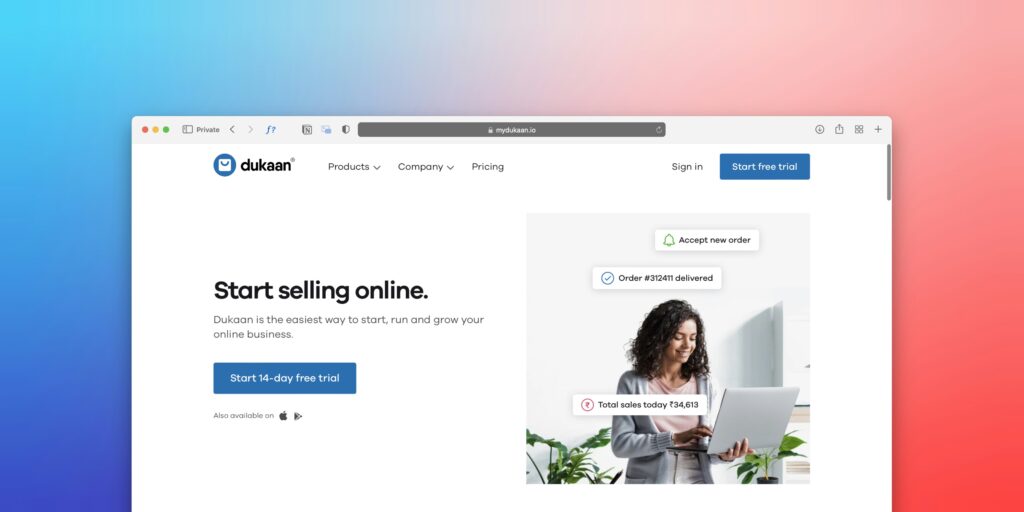
A call to action (CTA) is the instruction that tells a visitor what step to take next. “Call us now.” “Send a WhatsApp message.” “Request a quote.” “Buy now.” Without one, visitors read your page, feel unsure about what to do, and leave.
This is one of the most common problems Mukwood Digital sees when auditing small business websites in Zambia. The business has good services and reasonable prices — but nowhere on the website does it clearly tell the visitor how to become a customer.
According to HubSpot’s 2025 research, adding a single clear CTA to a webpage can increase conversions by up to 202%. That’s not a small improvement — that’s potentially doubling the number of leads your website generates.
Bottom Line: Every page on your website should have one clear answer to the question: “What should I do next?” If it doesn’t, you’re leaving money on the table.
In 2026, customers judge your business by your website before they ever speak to you. An outdated site tells them to go elsewhere.
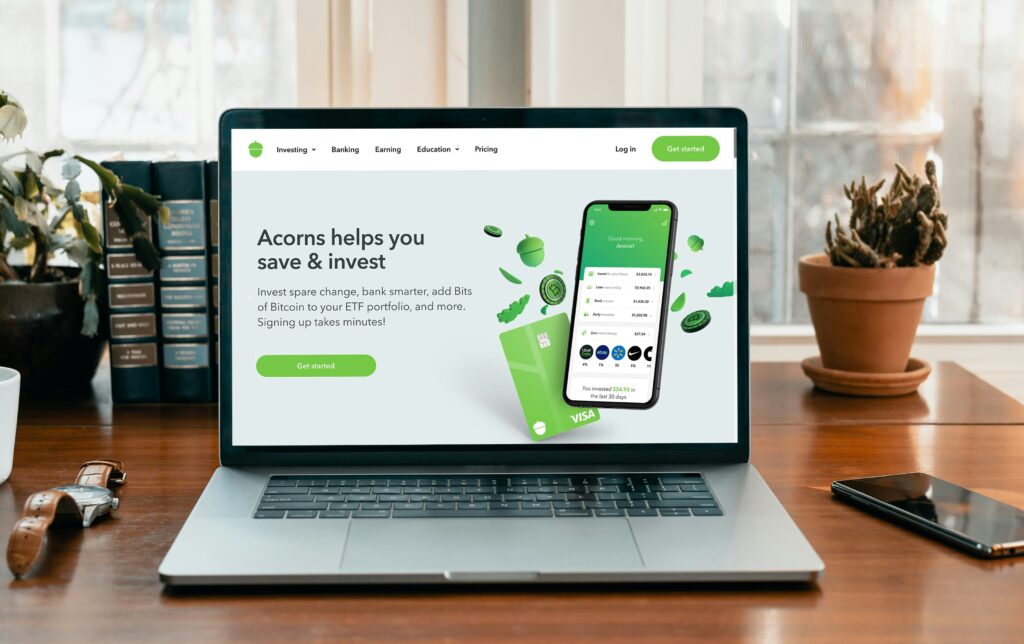
Research from Stanford University found that 75% of consumers judge a business’s credibility based on its website design (Stanford Web Credibility Research, cited by Forbes 2025). And according to Best Version Media (2025), inconsistent or outdated design signals an instant lack of trust to potential customers.
This is especially damaging in the Zambian market, where customers are increasingly savvy and have more options than ever. If your website looks like it was built in 2015 — with old fonts, outdated stock photos, and a layout that feels clunky — customers assume your business is equally outdated.
Trust signals in web design degrade when they are not maintained. Outdated logos, old screenshots, and stale customer reviews signal neglect.
Bottom Line: An outdated website tells customers you don’t take your business seriously online. A modern, clean design tells them the opposite — before you’ve said a single word.
The best website in the world is useless if nobody can find it. Most small business websites in Zambia are invisible on Google.

This is called an SEO (Search Engine Optimisation) problem. SEO is what determines whether your website shows up when someone searches “web designer Lusaka” or “catering services Zambia” on Google.
According to DemandSage (2026), organic search generates 53% of total website traffic — making it the single largest source of visitors for most websites. If your site isn’t optimised for search, you’re missing the majority of potential customers who are actively looking for what you offer.
The problem is that most websites in Zambia are built without any SEO foundation. No keyword research. No page titles. No meta descriptions. No structured content. The site exists — but Google doesn’t know what it’s about or who it’s for.
Bottom Line: If your website can’t be found on Google, it isn’t working. SEO isn’t optional in 2026 — it’s the difference between a website that brings in customers and one that just sits there.
📱 Not sure if your site is ranking on Google? Send us your website link on WhatsApp and we’ll give you an honest assessment. +260 764 377 700
Here are the key statistics that show just how much a poorly performing website costs businesses:
Mistake 1: “My website just needs a few updates — it’s basically fine.” Most website problems aren’t visible to the owner. Slow load times, missing SEO, and broken mobile experiences don’t show up when you browse your own site on your laptop. The problems only show up when a customer tries to use it on their phone, on a slow connection, in a hurry. Get an outside audit.
Mistake 2: “I can’t afford to fix my website right now.” Mukwood Digital offers professional website redesigns from K600. The cost of fixing your website once is almost always lower than the cost of losing customers to competitors every month. A website that converts even 5 additional clients per year pays for itself many times over.
Mistake 3: “My customers find me through WhatsApp and referrals anyway.” WhatsApp and referrals are valuable — but they have limits. A professional website works 24 hours a day, 7 days a week, reaching people who have never heard of you. In 2026, when potential clients receive a referral, the first thing they do is Google your business. If they don’t find a professional website, they question the referral.
Mistake 4: “SEO takes too long — it’s not worth it.” Basic SEO fixes — like updating page titles, setting up Google Business Profile, and adding meta descriptions — can show results within weeks, not months. The biggest gains often come from simple, overlooked technical fixes rather than long campaigns.
Mistake 5: “A new website won’t make a difference.” A new website built with the right structure, speed, mobile experience, and CTAs can double the number of enquiries a business receives. Mukwood Digital has seen this with clients like Nkonka Women in Agribusiness (NWAB) and Ubukia Foundation — both of which saw measurable improvements in engagement after launching new, properly built websites.
The Problem
A Lusaka-based service business was getting a steady flow of visitors to their website — but almost no enquiries. They were spending money on Facebook ads that sent traffic to the site, but the traffic wasn’t converting. The owner assumed the ads were the problem.
What Mukwood Digital Found
After reviewing the site, Mukwood Digital identified all five warning signs:
The Solution
Mukwood Digital rebuilt the website with a mobile-first design, reduced load time to under 2 seconds, added WhatsApp integration on every page, set up basic SEO, and installed an SSL certificate. The project was completed in two weeks.
The Result
Within 30 days of the new site launching, the client reported more than double the number of WhatsApp enquiries — from the same level of traffic. The ads didn’t change. The product didn’t change. The website did.
See more examples of websites we’ve built for Zambian businesses.
Q: How do I know if my website is losing customers? A: The clearest signs are a high bounce rate (above 60%), very few enquiries despite decent traffic, and poor performance on Google’s Mobile-Friendly Test and PageSpeed Insights tools. If you’re getting visitors but no leads, your website has a conversion problem.
Q: How much does it cost to fix a slow or outdated website in Zambia? A: It depends on the extent of the issues. Minor fixes like speed optimisation and adding CTAs can be done affordably. A full redesign with Mukwood Digital starts from K600 for a basic site and K4,500 for a professional custom build. A free consultation will help you understand exactly what’s needed.
Q: Can I fix my website myself or do I need a developer? A: Some fixes — like updating your Google Business Profile, compressing images, or rewriting your page titles — you can do yourself. Technical fixes like site speed, mobile responsiveness, and SEO structure typically require a developer to get right and are worth the investment.
Q: How long does it take to see results after fixing a website? A: Speed and mobile fixes show immediate results — visitors who previously left will now stay. SEO improvements typically show measurable results within 4–8 weeks for local search terms. CTA improvements can increase enquiries within days of being implemented.
Q: What is a bounce rate and what’s a good number? A: A bounce rate measures the percentage of visitors who leave your site after viewing only one page without taking any action. According to 2026 benchmarks, the average across all industries is around 45%. For service businesses, a good bounce rate is under 50%. Above 70% signals a significant problem with your website’s content, speed, or user experience.
Q: Does my website need SEO if I already use social media? A: Yes. Social media reaches people who already know you or follow you. SEO reaches people actively searching for what you offer — often with higher buying intent. According to DemandSage (2026), organic search generates 53% of all website traffic, far more than social media. Both are important, but SEO works 24 hours a day without requiring you to post content constantly.
Q: How do I add a WhatsApp button to my website? A: A WhatsApp button can be added by linking a button to your WhatsApp number using the format: https://wa.me/+260XXXXXXXXX. Most modern WordPress themes support this easily. Mukwood Digital includes WhatsApp integration as standard on all websites we build.
Your website should be your hardest-working employee. It should bring in enquiries while you sleep, build trust with customers you’ve never met, and send a steady stream of leads to your WhatsApp.
If it’s not doing that, it’s time to fix it.
Mukwood Digital builds websites for Zambian SMEs, startups, and NGOs that are fast, mobile-friendly, SEO-ready, and built to convert — starting from K600, with free domain and hosting included for 12 months.
We’ve helped organisations like Nkonka Women in Agribusiness, Ubukia Foundation, and Savannah Joy Creations build digital platforms that work. We can do the same for your business.
The first step costs nothing.
👉 Book a free consultation — we’ll review your current website, tell you honestly what’s wrong, and show you exactly how to fix it.
📱 WhatsApp us now: +260 764 377 700 | ✉ info@mukwooddigital.com